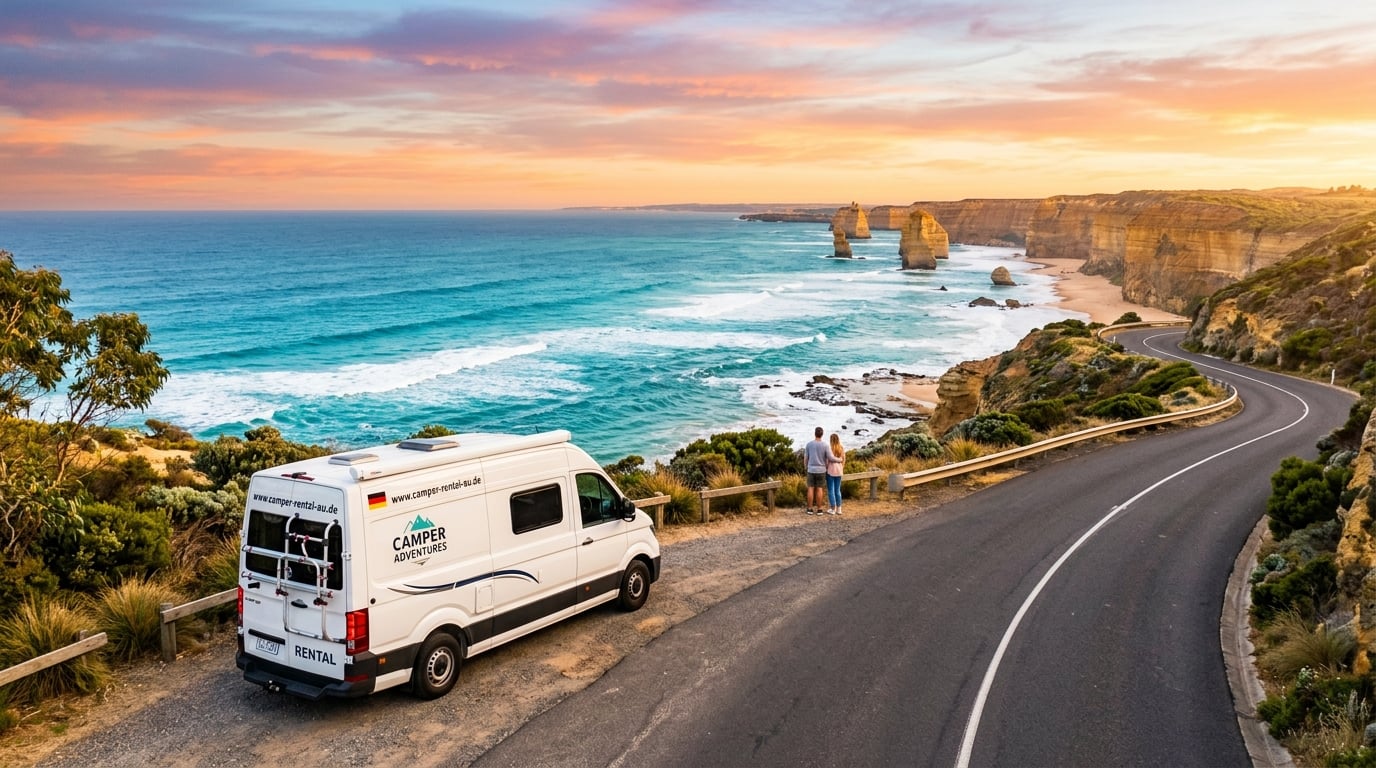
If you’re searching for a campervan rental guide, here’s the short answer: campervan hire is one of the most flexible ways to travel Australia, but the right choice depends on your route, passenger number, driving comfort and budget. The main things to get right are the licence rules, insurance excess, kilometre limits, sleeping setup, and whether you need a compact van for city-to-city travel or a larger motorhome for longer road trips. If you’re planning an East Coast run, a Great Ocean Road loop or an outback trip, it pays to match the vehicle to the route rather than just picking the cheapest listing. For help comparing options, start with Campervan Hire and then build your trip around the region you want to see, such as Sydney & NSW, Melbourne & Victoria or Byron Bay & Gold Coast.
What campervan rental actually includes
Most campervan rentals in Australia include the vehicle itself, basic camping gear, kitchen equipment and beds or convertible seating. The exact setup varies a lot, so read the inclusions carefully before you book. Some vehicles are simple self-contained vans with a bed and cooking space, while others are larger motorhomes with toilets, showers and more storage.
When comparing vans, check whether you’re getting bedding, towels, gas, a table, outdoor chairs, a fridge or cooler, and full roadside assistance. Don’t assume anything is included just because it appears in a photo. A vehicle that looks great online can still be a poor fit if you need to hire half the kit separately.
How to choose the right campervan for your trip
The best campervan is the one that suits how you actually travel. A couple doing a coastal road trip will usually be happier in a smaller, easier-to-park van. A group or travellers who want more comfort for wet-weather days may prefer a larger unit, even if it costs more to run.
Choose by route, not just by price
For urban pickups and shorter drives, a compact campervan is usually easier to live with. For longer trips through regional Australia, especially if you want more independence and storage, a larger van can be worth the extra size. If your plans include places like the Great Ocean Road or Whitsundays, think about ferry access, parking and campground access before you book.
Choose by passenger count
Always check sleeping capacity against your group size, and be realistic about comfort. A van rated for four people may be fine for two travellers who don’t mind tight quarters, but it can feel crowded very quickly for a longer trip. For 18–35 travellers, the sweet spot is often a van with enough room to sleep and store bags without constantly repacking.
Campervan rental costs: what to budget for
Never look at the base rate alone. Campervan hire usually comes with extra costs that can change the total significantly. A realistic budget should include the rental itself, insurance, fuel, campsite fees, optional extras and any one-way fees if you’re collecting and dropping off in different cities.
As a broad guide, budget roughly:
- Fuel: more if you’re covering long regional distances or driving a larger vehicle
- Camping fees: from low-cost holiday parks to higher-end powered sites
- Insurance extras: worth checking carefully because the standard excess can be high
- One-way fees: common on coast-to-coast or city-to-city trips
- Kitchen and linen extras: sometimes included, sometimes charged separately
If you want a trip with more structure, compare van hire against bundled travel options on Packages & Passes. That can make sense for travellers who want transport and experiences sorted together instead of piecing everything together one booking at a time.
Licence requirements and age rules
Most standard Australian and international car licences are accepted for campervan rental, provided the licence is valid and you meet the operator’s age rules. Some companies set a minimum age, often tied to insurance conditions. If you’re under 25, expect more restrictions and possibly higher insurance costs.
Keep your licence, passport and any required translation or international driving permit handy when you collect the vehicle. The name on your booking should match your licence exactly. If you’re travelling in Australia on a working holiday or a gap year, don’t leave this until pickup day because it can delay or block collection.
Insurance: the part that matters more than most people think
Insurance is where many first-time renters get caught out. The cheapest option often comes with a high excess, which means you could be responsible for a large amount if there’s damage, windscreen trouble, a tyre issue or an accident. A higher daily rate with reduced excess can sometimes be better value if you want less risk.
Read the policy for what counts as damage, what is excluded, and whether things like overhead damage, single-vehicle accidents, underbody damage and water crossings are covered. If your route includes remote areas, ask about roadside support and what happens if the vehicle breaks down far from a major town. This matters even more on routes linked to Uluru & Red Centre or Top End & Kakadu, where distances are long and services are thin.
Manual vs automatic: which should you choose?
If you’re comfortable driving both, automatic is usually the easier choice for Australian road trips, especially if you’re unfamiliar with local road conditions or driving on the left. It’s less tiring in city traffic and on hilly routes, and it can make parking simpler too.
Manual vehicles can be cheaper and may suit confident drivers who don’t mind changing gears. But don’t choose manual just to save a little if it makes the trip more stressful. A campervan trip works best when you can concentrate on the road, the weather and the scenery rather than the gearbox.
Where campervan travel works best in Australia
Campervans are strongest on well-serviced routes with regular towns, sealed roads and plenty of campsites. The East Coast is the obvious fit, especially for travellers hopping between cities, beaches and national parks. A van can also work well for parts of Victoria and New South Wales, particularly if you want a flexible trip with easy detours.
If you’re planning a coastal adventure, a campervan fits neatly with East Coast Adventures and can be a good base for side trips to Great Barrier Reef destinations or K'gari (Fraser Island). For travellers who prefer a mix of road trip and organised activities, pairing van hire with K'gari (Fraser Island) Tours or Whitsundays Tours often works better than trying to drive everywhere.
Where campervans are less practical
Campervans are not ideal for every trip. If you’re heading deep into remote regions, driving on unsealed roads, or chasing a very fast itinerary, a van may slow you down. In hot, dusty or rough country, you’ll also need to think carefully about vehicle clearance, tyre condition, fuel range and breakdown support.
For some travellers, a guided tour is the smarter call. That’s especially true if you want to spend more time on the experience and less time managing the vehicle. If your trip includes the reef, outback or remote north, compare your road-trip idea with options under Outback Safaris or Cairns Tours & Adventures.
Pickup and drop-off: what to inspect before you leave
Do not drive away without checking the vehicle properly. Take photos or video of every panel, wheel, windscreen and interior space before you sign off. Make sure the existing condition report matches what you see. Test the lights, indicators, brakes, fridge, gas, water, windows and locks while you’re still at the depot.
Ask how to empty wastewater, where to refill gas and water, and what to do if the vehicle breaks down or you get a flat tyre. The pickup staff should explain the basics, but you’ll usually remember more if you take notes. If anything is unclear, ask before you leave, not after you’ve hit the highway.
Camping in a campervan: parks, free camps and common sense
Australia has a wide range of places to stay overnight, from holiday parks to low-cost campgrounds and some free camping areas in regional spots. Your options will depend on the region, council rules and the type of vehicle you’ve hired. Self-contained vans can sometimes access more sites, but you still need to check local regulations.
A good rule is to pre-book peak-season nights, especially near popular coastal areas and school holiday periods. Travellers heading to surf regions often combine a van with Surf Camps or use a van to move between breaks around Byron Bay & Gold Coast. That gives you more freedom than a fixed base, but only if you plan fuel, parking and campsite availability ahead of time.
Driving tips for first-time campervan renters
Driving a campervan is different from driving a car. It’s taller, heavier and slower to stop. Give yourself more time for lane changes, braking and turns, especially in busy cities. Check height limits before entering car parks, driveways and fuel stations.
- Keep speeds conservative and allow extra braking distance
- Plan fuel stops earlier than you would in a car
- Watch wind conditions on exposed highways and bridges
- Reversing is trickier, so get a spotter if possible
- Don’t overload the vehicle with bags, water or gear
If you’re new to road trips, start with a route that has regular towns and straightforward roads. The first few hours should be about getting comfortable, not testing the vehicle to its limits.
Who campervan hire suits best
Campervan hire is a strong option for backpackers, couples and friends who want flexibility, decent comfort and the chance to move at their own pace. It works best if you like changing plans, stopping for photos, and sleeping close to the coast or in regional towns. It is less suitable if you want a fast, city-heavy trip with no interest in self-catering or driving long distances.
For travellers on an open itinerary, a van can be the best way to connect multiple highlights in one trip. For a more structured route, use your van as the transport piece and book a few key activities in advance through travel guides and all bookable trips. That way you keep flexibility without missing the main experiences.
How to book without making common mistakes
Before you confirm, check the cancellation terms, kilometre allowance, insurance excess, minimum age, one-way fees and what’s included in the van. Ask yourself whether the rental company’s depot locations actually suit your route. A cheap daily rate can be a bad deal if it adds extra transfers, towing or hidden fees.
It also helps to line up your route before you book. If your plan is still loose, use free trip planning help to match the vehicle to the journey. That’s the easiest way to avoid choosing a van that looks fine on paper but doesn’t suit your actual itinerary.
Final take: is campervan rental worth it?
For many Australia trips, yes — provided you choose the right vehicle, understand the insurance and book with a route in mind. Campervan rental gives you more freedom than buses or fixed tours, and it can be a smart way to see multiple regions without constantly checking into hotels. But it works best when you keep the itinerary realistic and don’t underestimate running costs or driving time.
If you want the flexibility of a road trip with less guesswork, start with the vehicle first, then build the rest of the trip around it. That’s the practical way to do Australia by campervan.
Quick rule: if your trip is coastal, flexible and stops often, campervan hire usually makes sense. If it’s remote, rushed or heavily activity-based, compare it with guided options before you book.
Related options to compare before booking
If you’re still deciding, it’s worth comparing campervan hire with a few region-specific trips. The East Coast suits road travel well, while reef, island and outback regions can be better handled with a mix of transport and guided activities. Start by comparing your route against Campervan Hire, then check whether a region like Whitsundays, K'gari (Fraser Island) or Great Barrier Reef is better done as a tour day rather than another driving leg.
If you want help building a sensible plan, Dundee can help you compare options without the sales fluff. The best trip is usually the one that fits your route, not the one with the flashiest van photo.